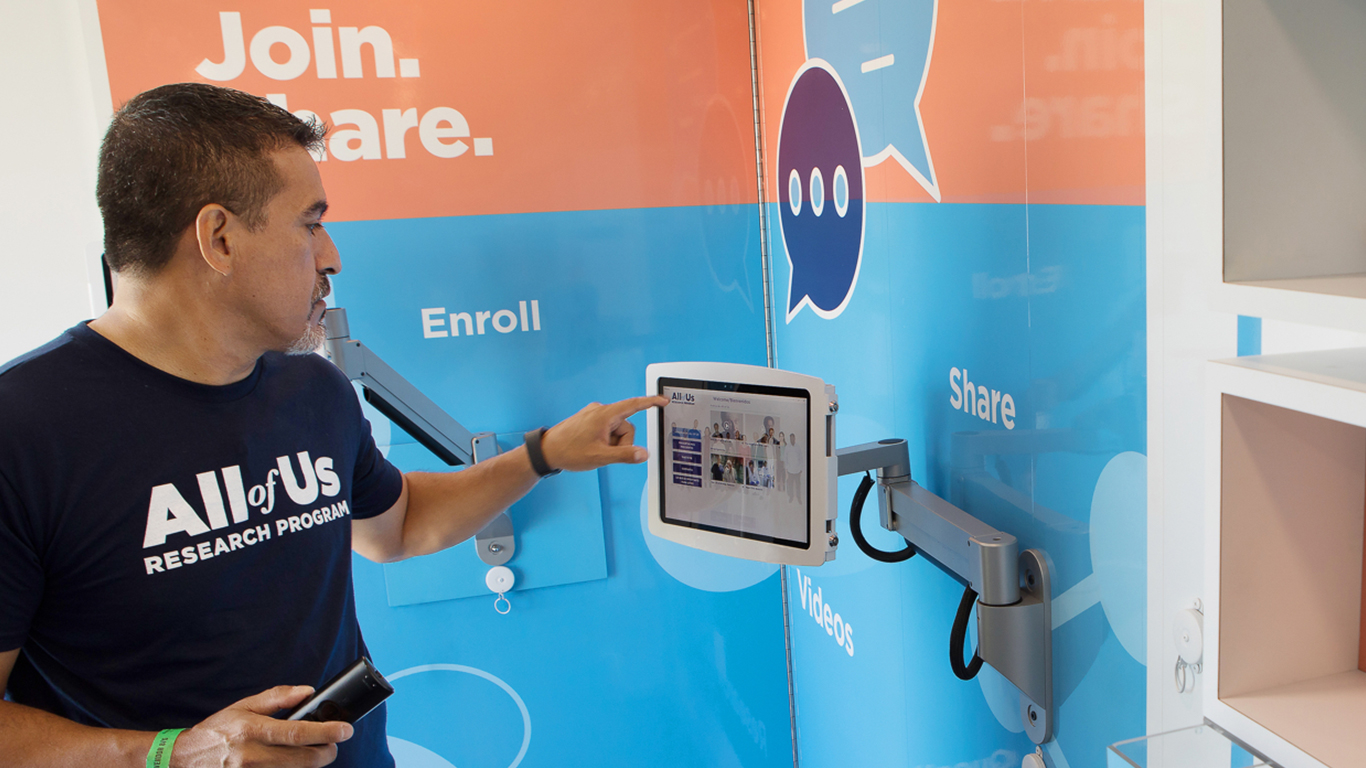
The overall goal of the All of Us Research Program is to set the foundation for a new way of developing research that fosters open, responsible data sharing with the highest regard to participant privacy, and that puts engaged participants at the center of research efforts.
The All of Us Research Program aims to build a national research cohort of at least one million U.S. participants. The program will be a participant-engaged, data-driven enterprise supporting research to develop more effective ways to prolong health and treat disease. This data will allow doctors to innovate the next great breakthroughs in medicine and identify more precise treatments, transforming the way we treat diseases and care for patients.
Digital products, including websites and kiosks, were required to support the aims and goals of the program. These products were critical to building awareness, communicating exactly what the program is and how it will work, signing up participants, communicating with them, and distributing information. The digital experiences needed to be thoughtful, thorough, engaging, easy to use and understand.
National Institutes of Health (NIH)
All of Us Medical Research Mobile Exhibit
Wondros
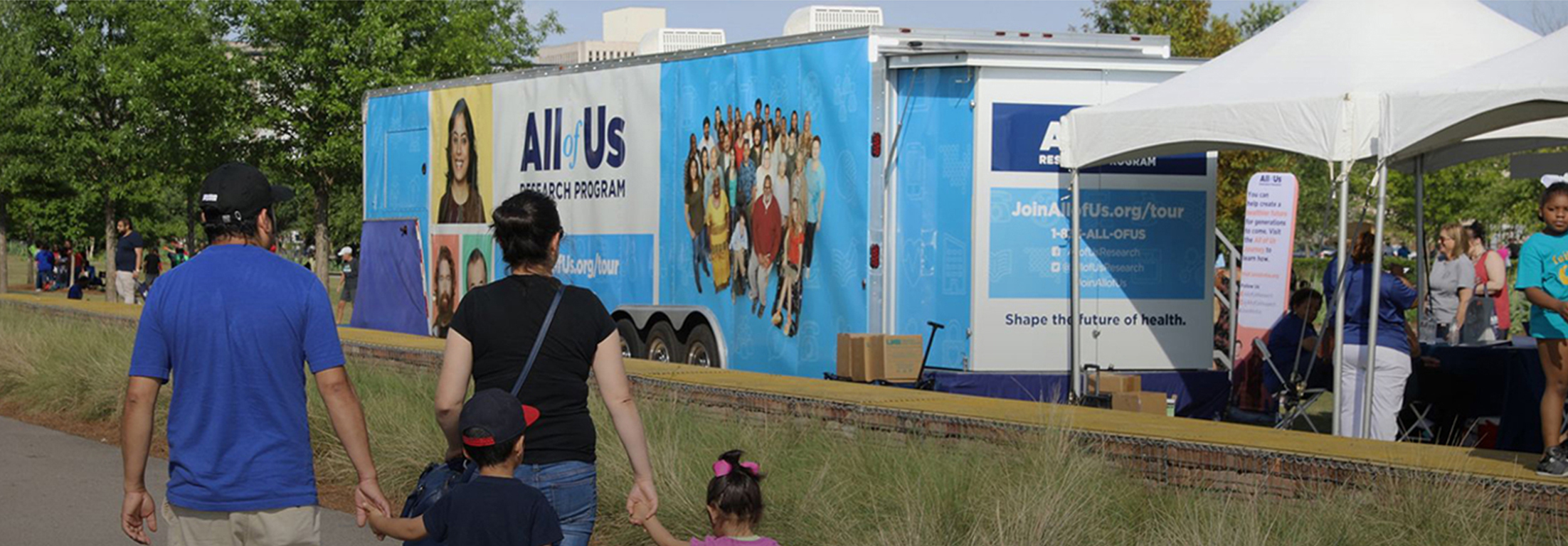
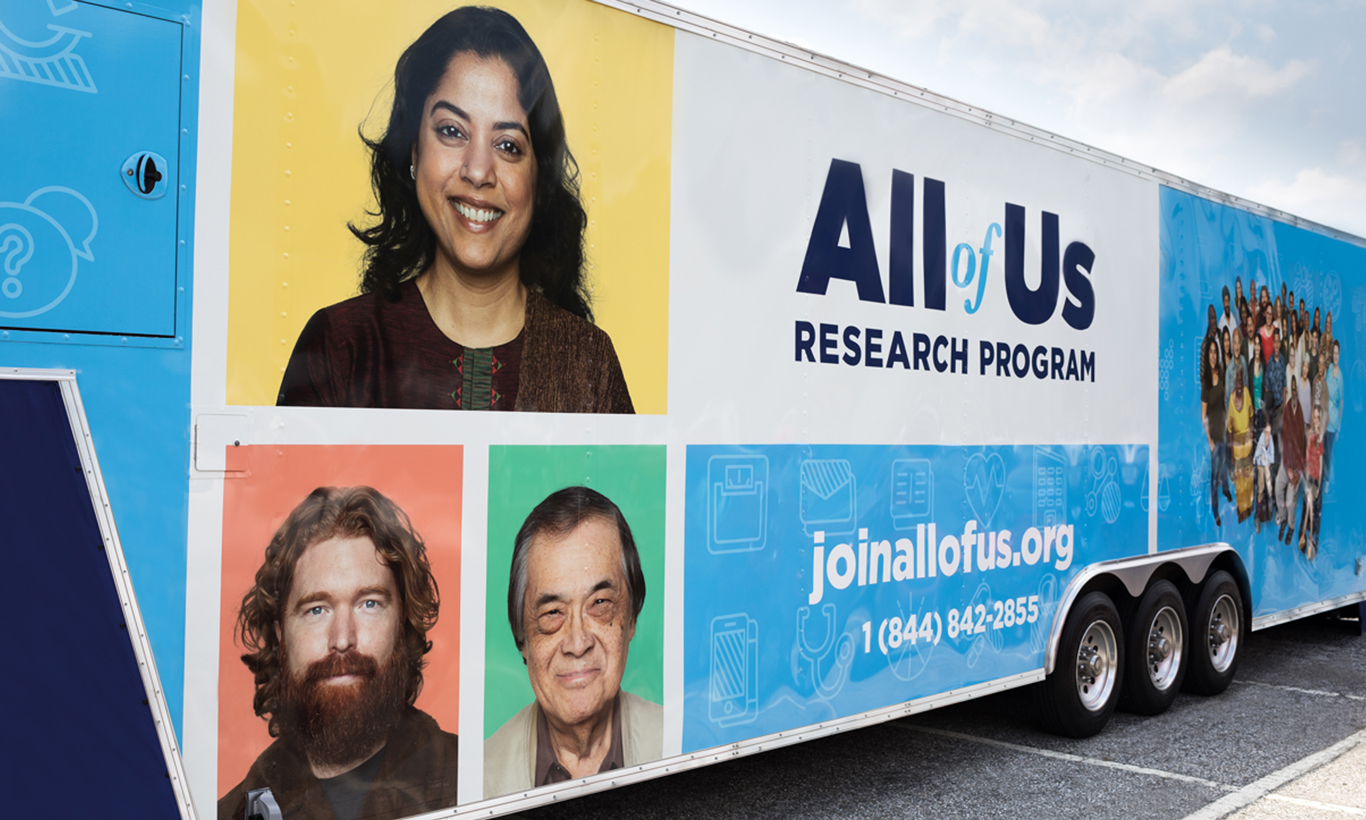
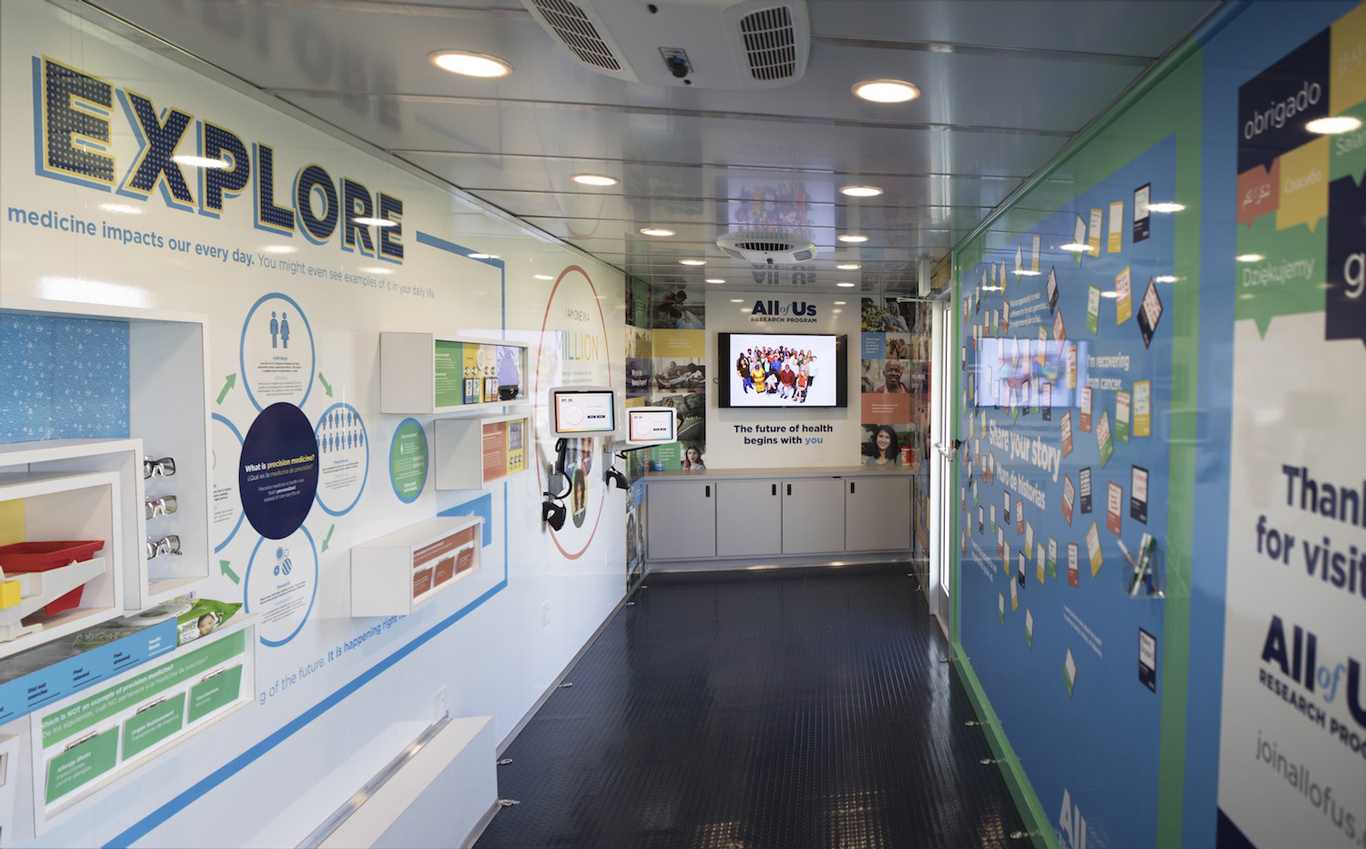
All of Us aims to gather health and medical-related data from one million or more Americans to accelerate research and improve treatment with Precision Medicine. The campaign consisted of a nationwide tour of 36 cities and multiple events with the All of Us Mobile Medical Exhibit.
Overview
The Team and My Role
A Hybrid Role
Working remotely and from the Wondros offices in Hollywood, California, I assisted the UX Team with building a number of assets for web and mobile web, iOS- and Android-native apps, print, and social media. For three months I worked in Hollywood, onsite and remotely, with the Design, Marketing and Product Teams, as well as stakeholders at NIH including:
- 1 Project Lead
- 1 UX Manager
- 4 Project Managers
- 2 UX Designers
- 5 Junior Visual Designers
- 1 Photographer
- 2 Content Writers
- 1 Third Party Development Team and
- 1 UX Researcher based in London, England and
- 1 Senior UX Designer (myself)
- 1 UX Manager
- 4 Project Managers
- 2 UX Designers
- 5 Junior Visual Designers
- 1 Photographer
- 2 Content Writers
- 1 Third Party Development Team and
- 1 UX Researcher based in London, England and
- 1 Senior UX Designer (myself)
I was tasked with meeting with, and analyzing the requirements of NIH stakeholders, then conceptualizing an interactive "One In A Million" kiosk that would engage visitors to the mobile exhibit and feel comfortable enough to participate by volunteering their personal health information.
The UX Process
Content Models
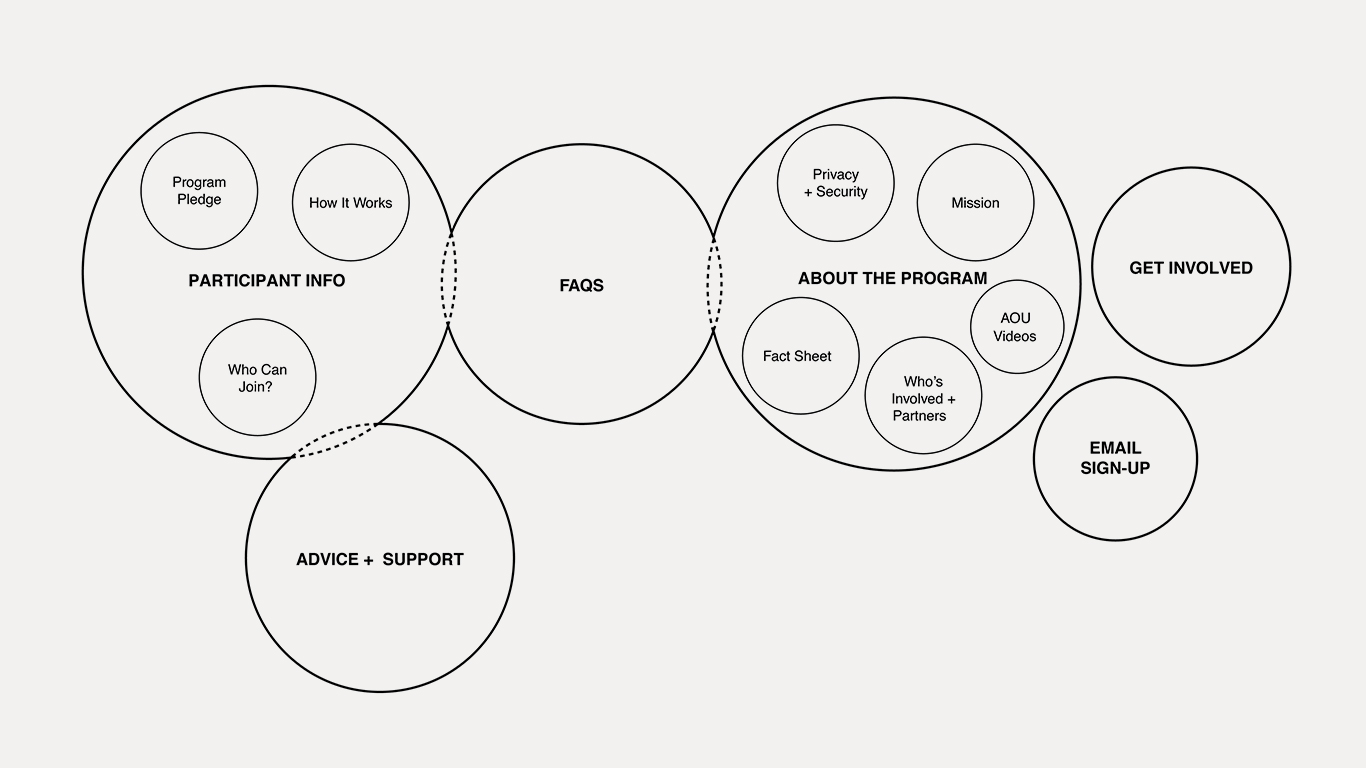
Based on a number content models, we analyzed the requirements and investigated creating an easy to understand digital experience that would coincide with the user's physical experience within the mobile unit.
Discovery and Wireframing
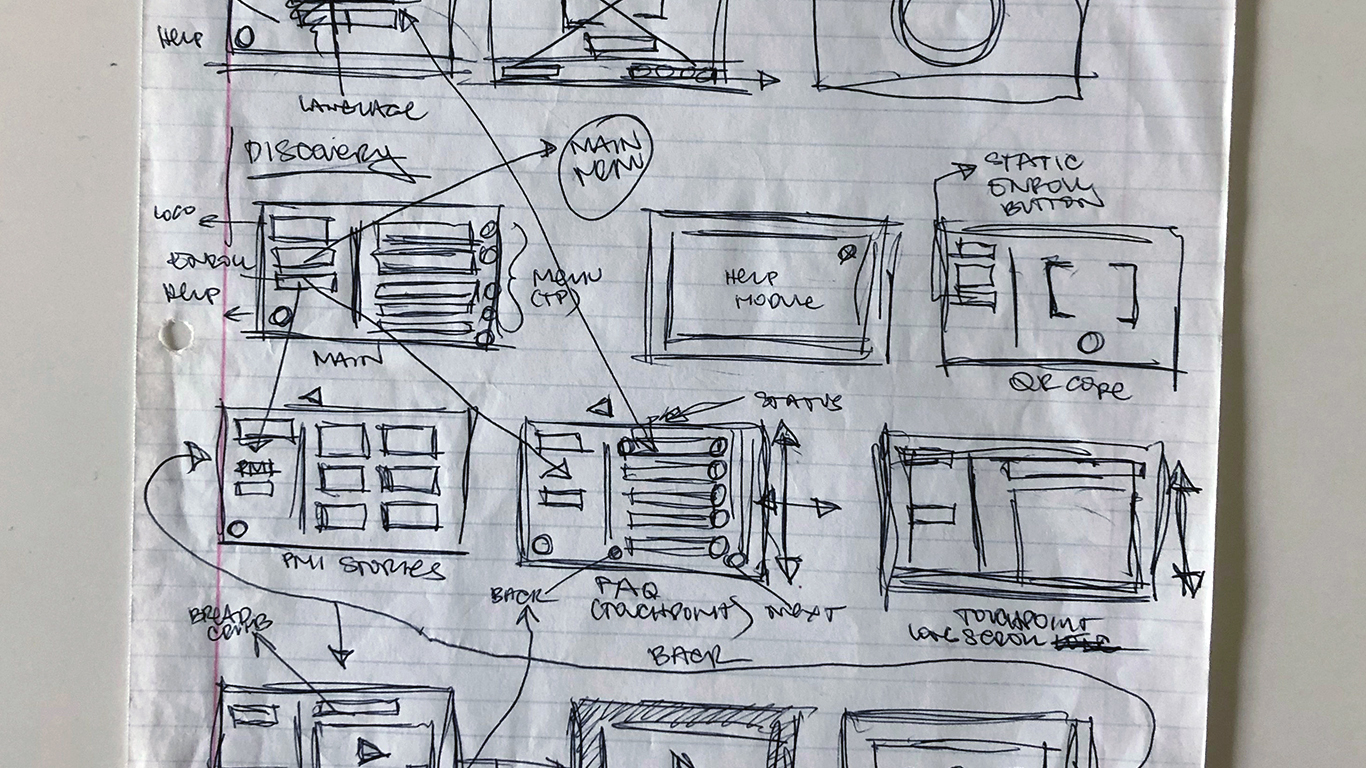
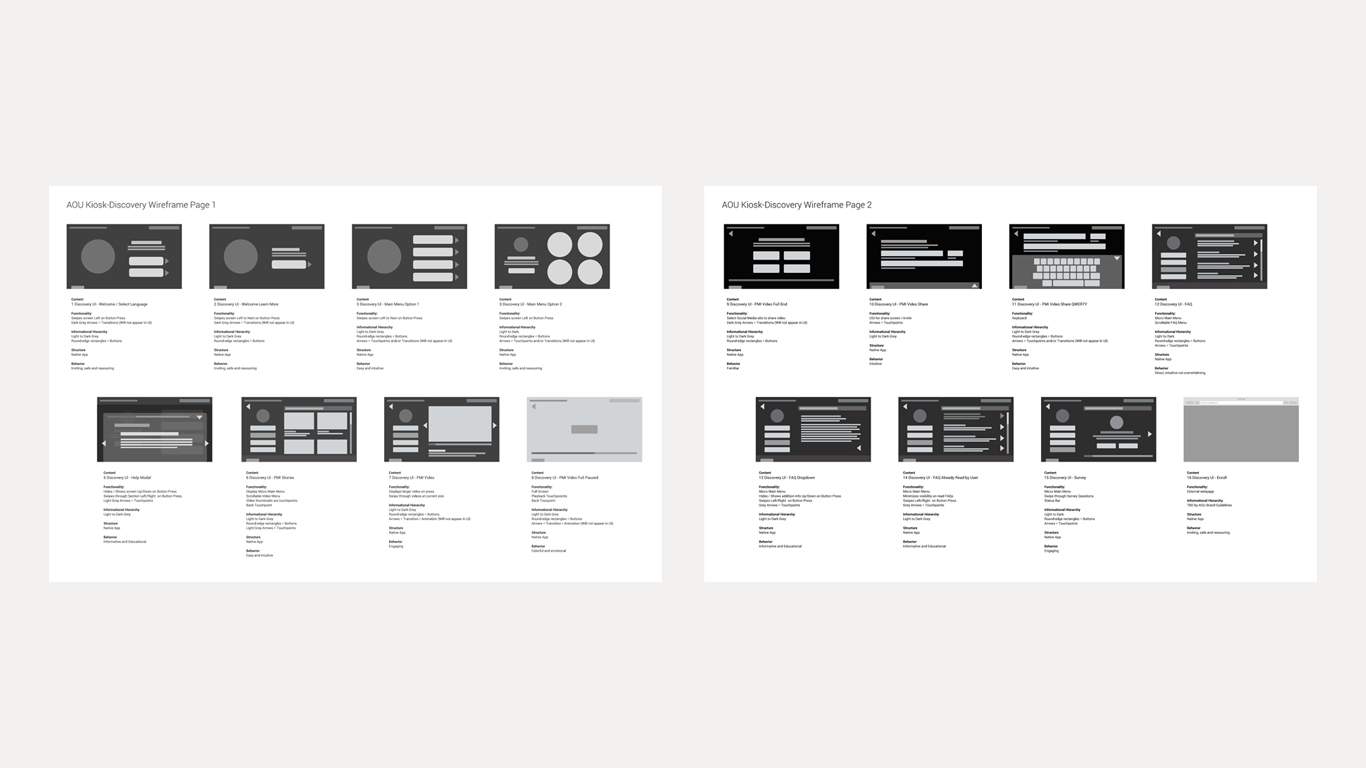
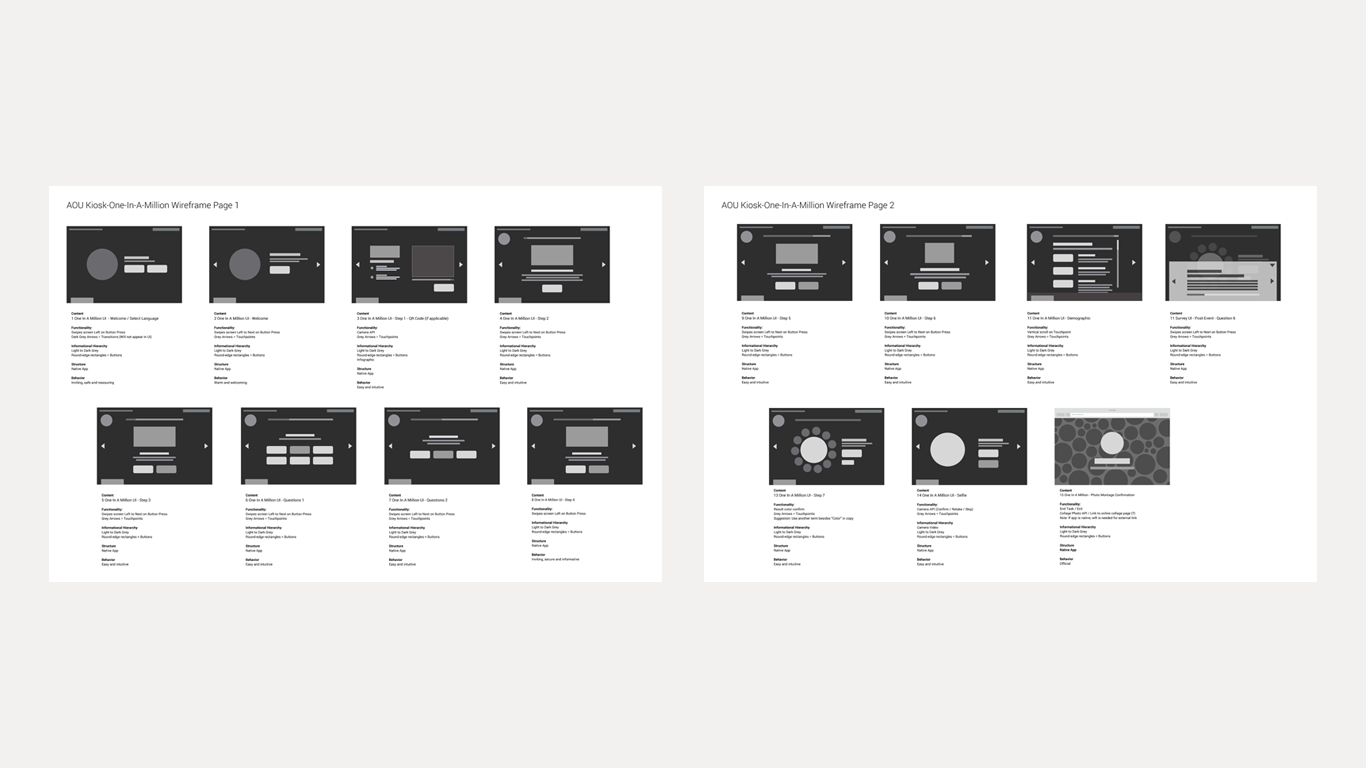
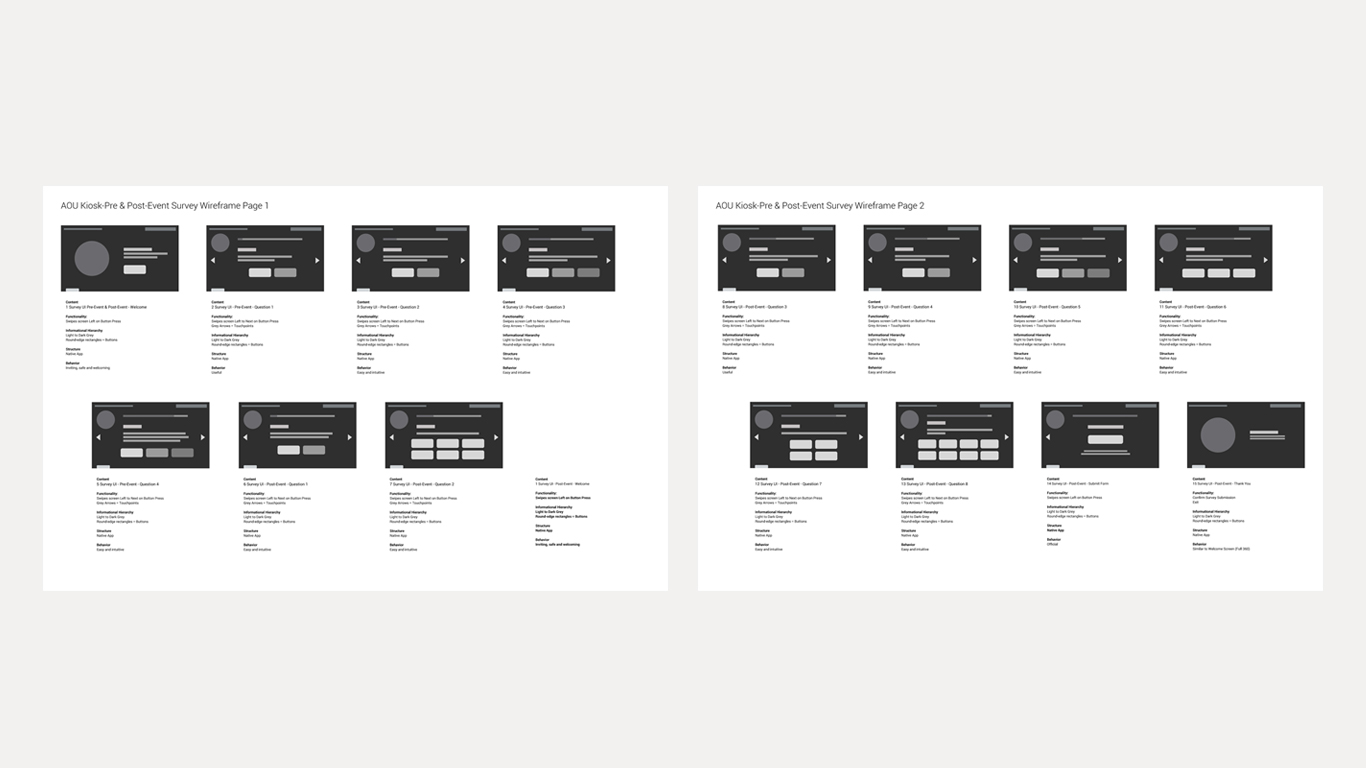
It was important the the user interface and interaction be simple and heuristic for a wide age range of visitors to the mobile exhibit. Wireframes iterations (above) for the "One In A Million" kiosk, which educates users about the All of Us Research Program via FAQs and videos. Users can share videos via social media, and/or take a pic and contribute it to a live onsite selfie exhibit.
Components and Interface Design
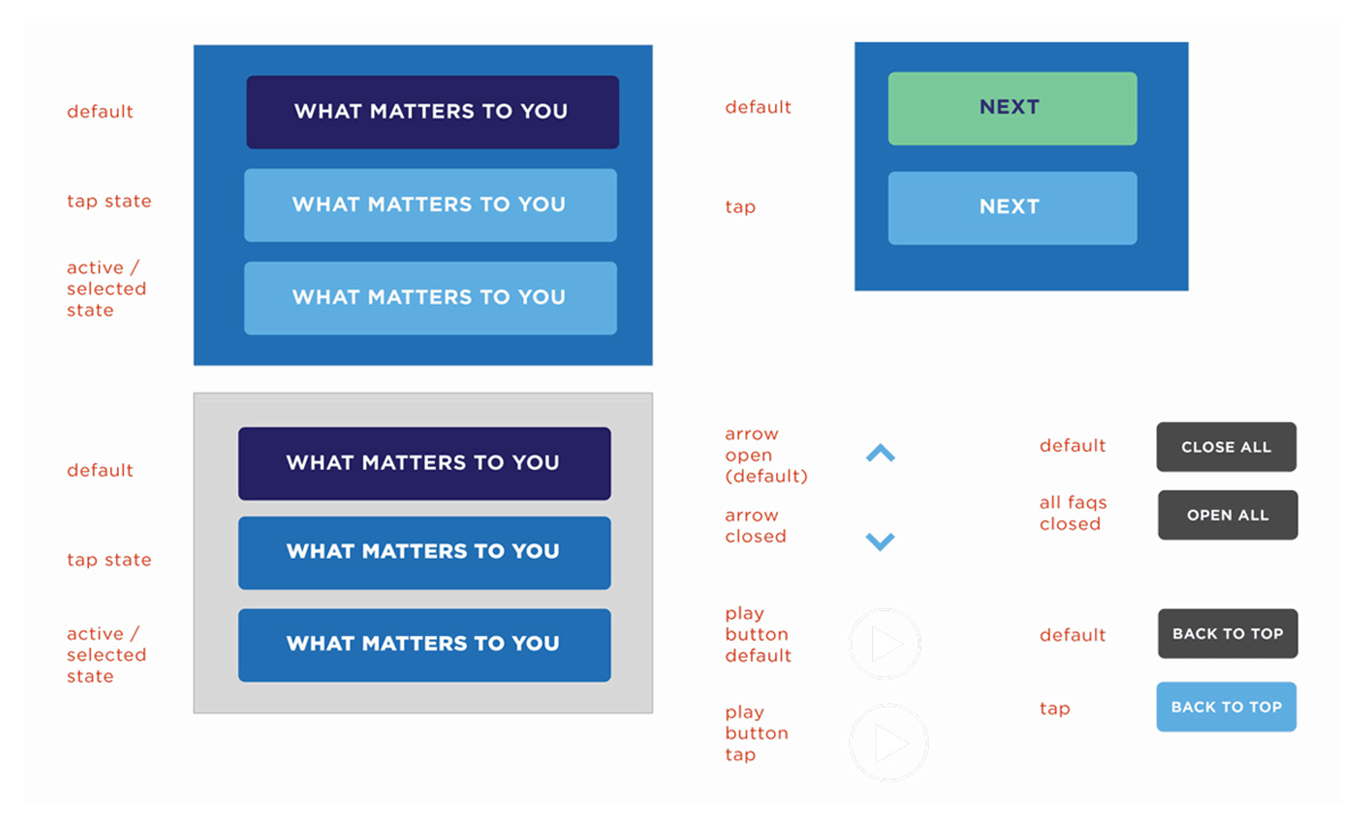
Due to the utilitarian nature of the All of Us initiative, it was necessary for the kiosk interface to be extremely simple and accessible to people in a wide range of age and various physical abilities.
The "One In A Million" Mobile Kiosk
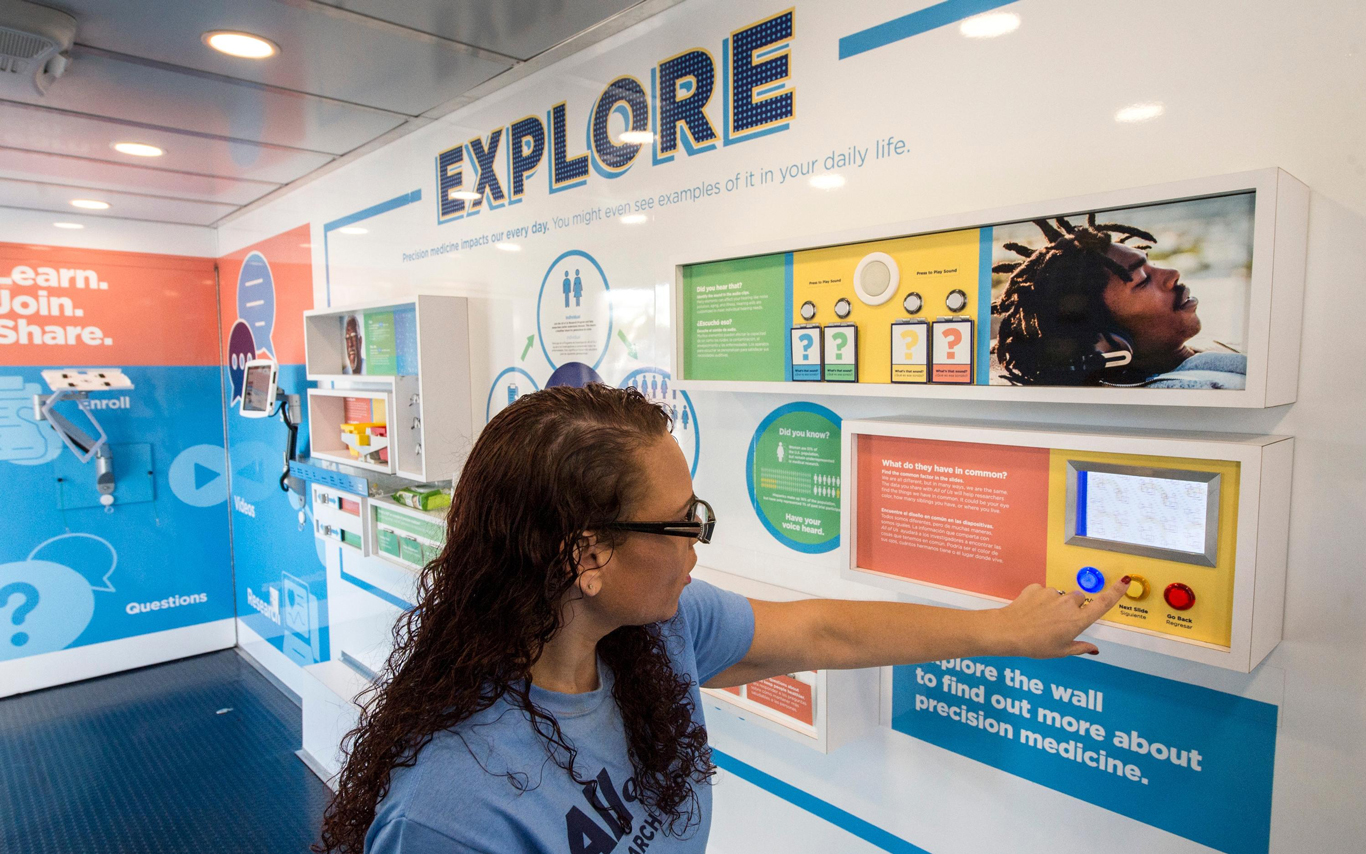
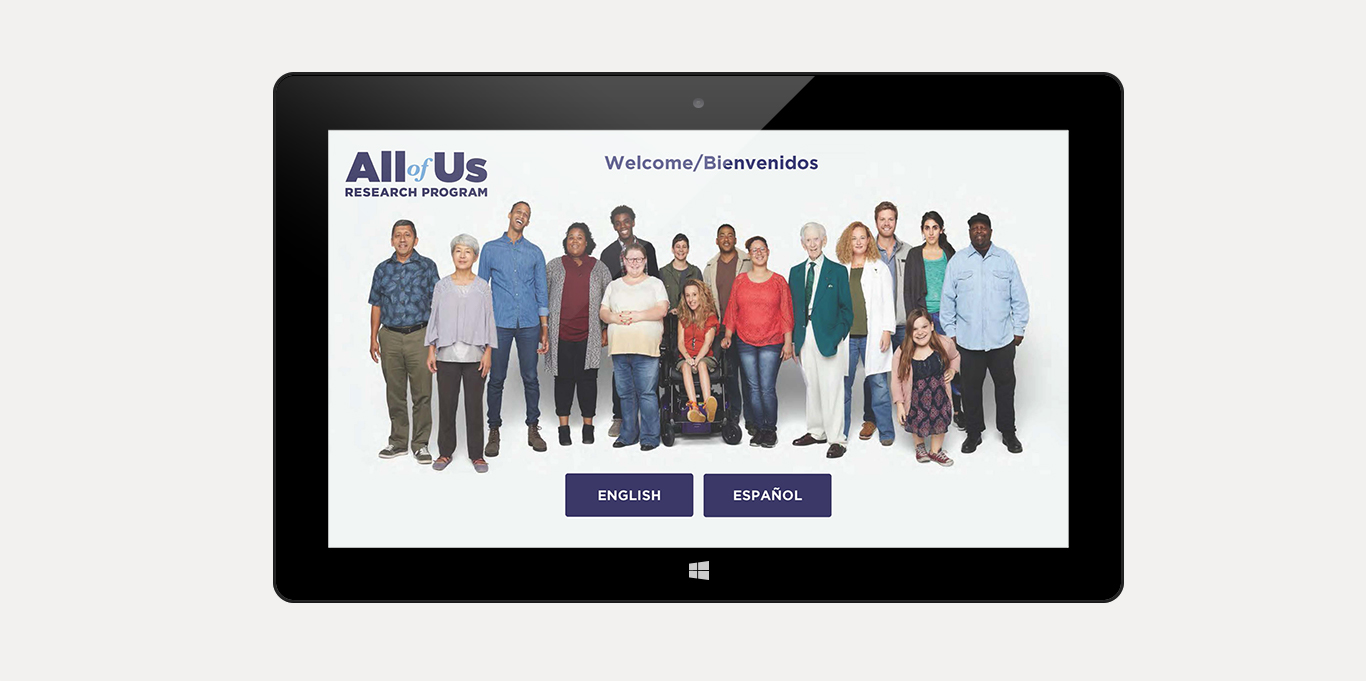
The "One In A Million" interactive kiosk on the mobile unit invited users into an immersive experience to make an art mural, take photos, land learn more about the initiative. Based on their answers, users were assigned a photo frame color. They could then print out a photo from the kiosk, framed in their chosen color, to add to an "All of Us" selfie exhibit within the mobile exhibit.